JUST STEP IN WHEN SOMETHING NEEDS DOING
In this chapter we are going to cover two things.
Some practical stuff that just needs to happen for the programme to run well.
And then the mindset that will genuinely make your experience as a coach a good one.
These are not complicated. Honestly, most of them are just common sense.
But they make a real difference to how the programme runs — both for the participants and for the rest of the coaching team.
1. BE THERE ON TIME
Try to arrive at least 30 minutes before your session starts.
The reason is simple — there is always stuff to set up before participants arrive.
Getting boats in the water. Checking conditions. Making sure everything is in the right place.
It also just matters to the rest of the team. Everyone is counting on each other.
Showing up on time is one of the easiest ways to be a good teammate.
When one person is late it creates more work for everyone else.
Boats and oars are expensive and they need to be treated with care.
Carry oars with the handle forward. Place them somewhere safe so nobody trips on them.
When the session is done — make sure everything goes back where it belongs.
The finer boats get wiped down after use.
When carrying boats, always make sure there are enough people.
A 4x or gig needs at least six. An 8+ needs at least ten.
There are a few rules in this programme that are non-negotiable.
The most important ones are around safety.
It does not matter if participants really want to row. It does not matter if it looks mostly fine.
During the first three weeks, nobody rows in a 1x or 2x.
Beginners need time to find their balance in bigger, more stable boats first.
If the numbers do not work out evenly — there are easy fixes.
One extra person means a coach joins them in a double.
And if there are life jacket rules at the club — follow them.
If you cannot make a session, let someone know as early as possible.
Things happen and that is completely fine — we just need to know so we can sort it out.
Here is the honest truth.
The coaches who have the best time in this programme — and whose participants have the best time — are almost never the ones with the most rowing experience.
They are the ones who show up with the right attitude.
I am here. I am present. I care about making this good.
That might sound obvious — but it is worth saying clearly.
Because the biggest thing we noticed last year was that some coaches were coming in with more of a "I am here to help out a bit" kind of energy.
Which is great. We love that people want to help.
When you are genuinely engaged — watching your crew, giving them real feedback, bringing some energy to the dock — they pick up on it.
They start trying harder. The session becomes something they actually enjoy.
When a coach looks like they would rather be somewhere else — the crew deflates.
It is not something people consciously think about. They just feel it.
If this is your first time coaching, there will be moments where you are not sure what to do or say.
What matters is that you keep going, stay calm, and do not freeze up.
Participants do not need a perfect coach.
A good mindset for those moments — focus on one thing at a time.
If the boat is wobbly, work on balance before anything else.
If people are rowing out of sync, fix that before giving individual technique feedback.
And when someone gets something right — tell them.
Beginners light up when they feel like they are actually improving.
This also extends to the coaching team. We are all in this together.
If you see a fellow coach struggling — check in.
If someone is newer than you and unsure of something — share what you know.
If boats need carrying and you are nearby — you help carry them.
There is always someone around who has been through it before and is happy to help.
If a session is about to start and nobody has kicked off the warm-up — you start it.
If a boat is coming in and needs someone to guide it to the dock — you do that.
If a participant looks lost and unsure where to go — you go and tell them.
This is not about being in charge or taking over.
The coaches who do this naturally are the ones who make everything run smoothly without anyone really noticing.
The coaches who get the most out of this programme are the ones who treat it like it matters.
Because it does.
Show up. Be present. Look out for your team.
And you are already most of the way there.
And that is exactly the kind of coaching that makes participants feel safe and looked after.
It is just about reading the room and acting when something needs to happen.
Nobody is expected to figure everything out alone.
Two things they are doing well. One thing to work on.
That formula works every time.
One clear instruction that people can actually act on is worth ten corrections at once that nobody can process.
They need someone who is with them and paying attention.
That is completely normal and nothing to stress about.
So the single most effective thing you can do as a coach — especially if you are new to it — is simply to be present and mean it.
And that is the whole point.
But there is a difference between helping out and actually being in it.
And participants feel that difference immediately.
The only thing that does not work is silence.
Always ask participants if they would like one. Never assume.
Two extra means a coach rows a 4x with three instead of leaving anyone in a small boat alone.
Safety comes first and the rules exist for good reasons.
If the wind is over 8 m/s or there is any risk of thunderstorms — we do not go out on the water. Full stop.
Even if the group feels confident — always have a couple of extra hands. Better safe than sorry.
It takes two minutes and it makes a real difference over the course of a summer.
If that is done before people show up, the session flows. If it is not, the whole thing starts behind — and it is hard to catch up.
The second part is actually the more important of the two — so stick with it.
A FEW THINGS THAT JUST NEED TO HAPPEN
EXPECTATIONS & MINDSET


2. LOOK AFTER THE EQUIPMENT
3. KNOW THE RULES AND STICK TO THEM


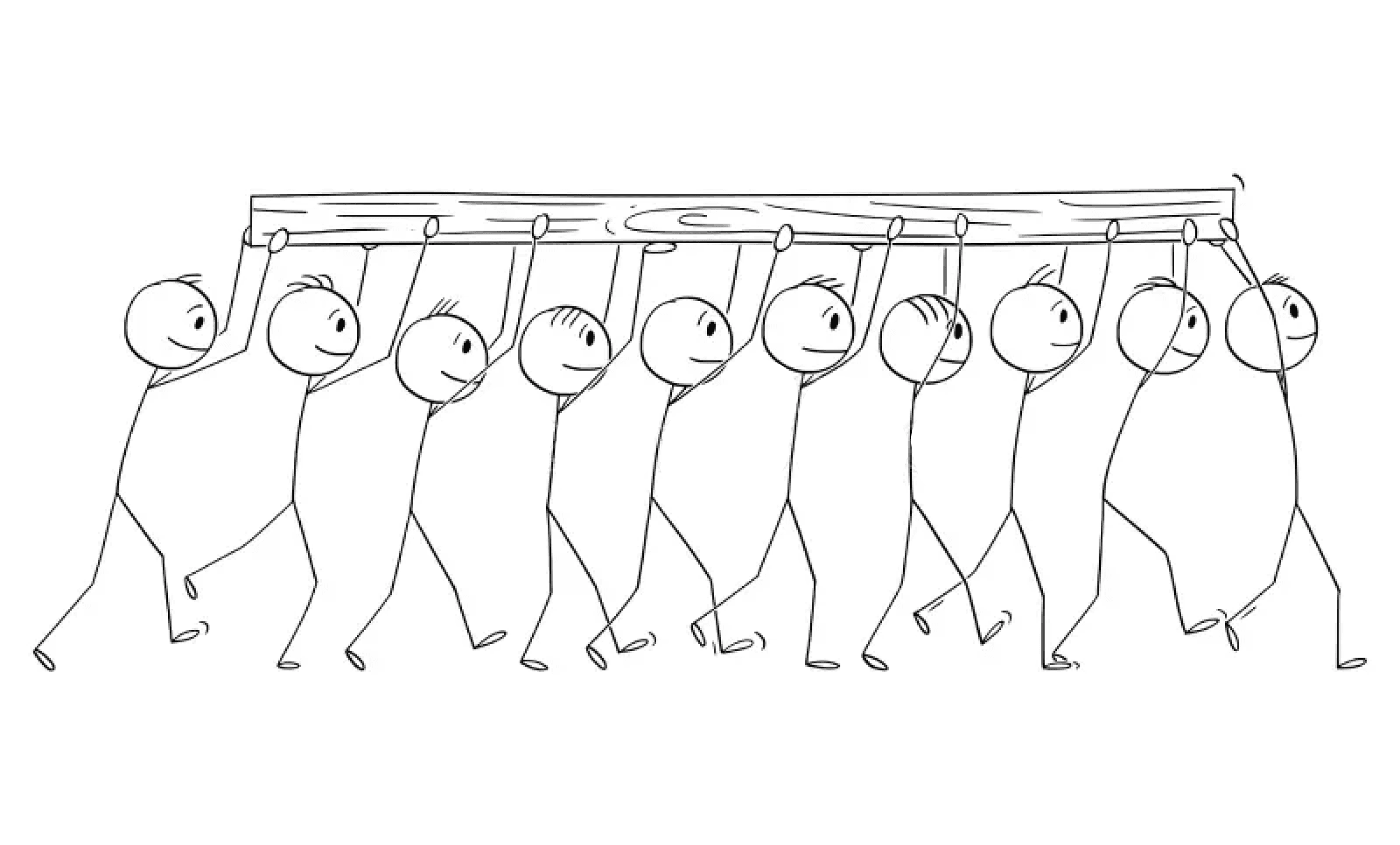



4. IF SOMETHING COMES UP — JUST SAY SO
THE MINDSET THAT MAKES THE DIFFERENCE
YOUR ENERGY SETS THE TONE
YOU DO NOT HAVE TO HAVE ALL THE ANSWERS





LOOK OUT FOR EACH OTHER

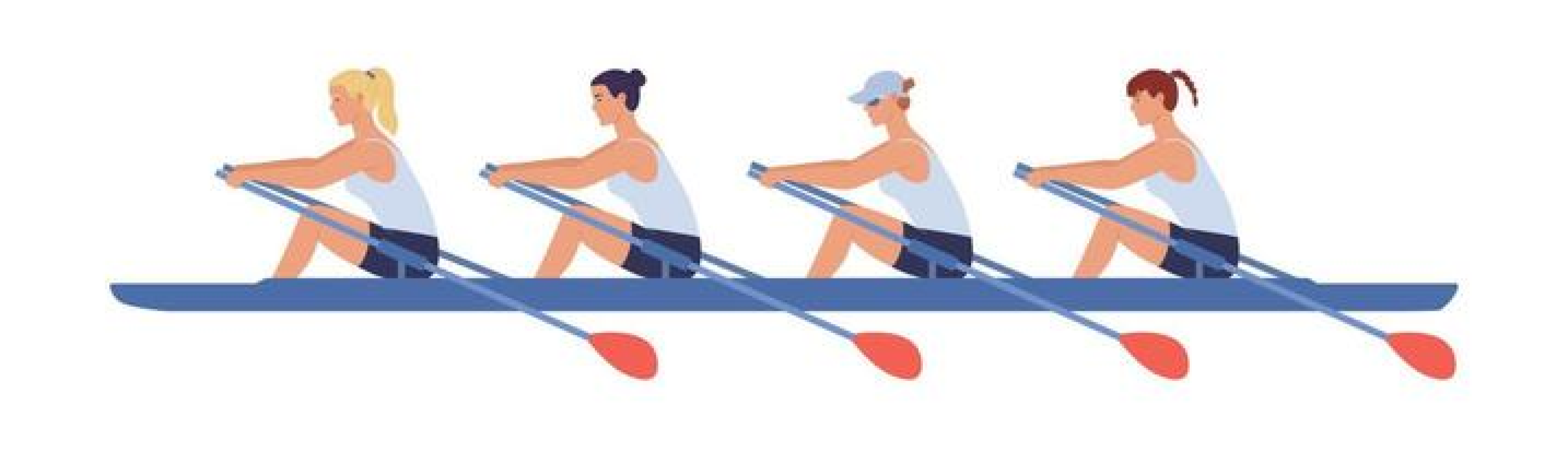
JUST STEP IN WHEN SOMETHING NEEDS DOING
JUST STEP IN WHEN SOMETHING NEEDS DOING
In this chapter we are going to cover two things.
In this chapter we are going to cover two things.
Some practical stuff that just needs to happen for the programme to run well.
Some practical stuff that just needs to happen for the programme to run well.
And then the mindset that will genuinely make your experience as a coach a good one.
And then the mindset that will genuinely make your experience as a coach a good one.
These are not complicated. Honestly, most of them are just common sense.
These are not complicated. Honestly, most of them are just common sense.
But they make a real difference to how the programme runs — both for the participants and for the rest of the coaching team.
But they make a real difference to how the programme runs — both for the participants and for the rest of the coaching team.
1. BE THERE ON TIME
1. BE THERE ON TIME
Try to arrive at least 30 minutes before your session starts.
Try to arrive at least 30 minutes before your session starts.
The reason is simple — there is always stuff to set up before participants arrive.
The reason is simple — there is always stuff to set up before participants arrive.
Getting boats in the water. Checking conditions. Making sure everything is in the right place.
Getting boats in the water. Checking conditions. Making sure everything is in the right place.
It also just matters to the rest of the team. Everyone is counting on each other.
It also just matters to the rest of the team. Everyone is counting on each other.
Showing up on time is one of the easiest ways to be a good teammate.
Showing up on time is one of the easiest ways to be a good teammate.
When one person is late it creates more work for everyone else.
When one person is late it creates more work for everyone else.
Boats and oars are expensive and they need to be treated with care.
Boats and oars are expensive and they need to be treated with care.
Carry oars with the handle forward. Place them somewhere safe so nobody trips on them.
Carry oars with the handle forward. Place them somewhere safe so nobody trips on them.
When the session is done — make sure everything goes back where it belongs.
When the session is done — make sure everything goes back where it belongs.
The finer boats get wiped down after use.
The finer boats get wiped down after use.
When carrying boats, always make sure there are enough people.
When carrying boats, always make sure there are enough people.
A 4x or gig needs at least six. An 8+ needs at least ten.
A 4x or gig needs at least six. An 8+ needs at least ten.
There are a few rules in this programme that are non-negotiable.
There are a few rules in this programme that are non-negotiable.
The most important ones are around safety.
The most important ones are around safety.
It does not matter if participants really want to row. It does not matter if it looks mostly fine.
It does not matter if participants really want to row. It does not matter if it looks mostly fine.
During the first three weeks, nobody rows in a 1x or 2x.
During the first three weeks, nobody rows in a 1x or 2x.
Beginners need time to find their balance in bigger, more stable boats first.
Beginners need time to find their balance in bigger, more stable boats first.
If the numbers do not work out evenly — there are easy fixes.
If the numbers do not work out evenly — there are easy fixes.
One extra person means a coach joins them in a double.
One extra person means a coach joins them in a double.
And if there are life jacket rules at the club — follow them.
And if there are life jacket rules at the club — follow them.
If you cannot make a session, let someone know as early as possible.
If you cannot make a session, let someone know as early as possible.
Things happen and that is completely fine — we just need to know so we can sort it out.
Things happen and that is completely fine — we just need to know so we can sort it out.
Here is the honest truth.
Here is the honest truth.
The coaches who have the best time in this programme — and whose participants have the best time — are almost never the ones with the most rowing experience.
The coaches who have the best time in this programme — and whose participants have the best time — are almost never the ones with the most rowing experience.
They are the ones who show up with the right attitude.
They are the ones who show up with the right attitude.
I am here. I am present. I care about making this good.
I am here. I am present. I care about making this good.
That might sound obvious — but it is worth saying clearly.
That might sound obvious — but it is worth saying clearly.
Because the biggest thing we noticed last year was that some coaches were coming in with more of a "I am here to help out a bit" kind of energy.
Because the biggest thing we noticed last year was that some coaches were coming in with more of a "I am here to help out a bit" kind of energy.
Which is great. We love that people want to help.
Which is great. We love that people want to help.
When you are genuinely engaged — watching your crew, giving them real feedback, bringing some energy to the dock — they pick up on it.
When you are genuinely engaged — watching your crew, giving them real feedback, bringing some energy to the dock — they pick up on it.
They start trying harder. The session becomes something they actually enjoy.
They start trying harder. The session becomes something they actually enjoy.
When a coach looks like they would rather be somewhere else — the crew deflates.
When a coach looks like they would rather be somewhere else — the crew deflates.
It is not something people consciously think about. They just feel it.
It is not something people consciously think about. They just feel it.
If this is your first time coaching, there will be moments where you are not sure what to do or say.
If this is your first time coaching, there will be moments where you are not sure what to do or say.
What matters is that you keep going, stay calm, and do not freeze up.
What matters is that you keep going, stay calm, and do not freeze up.
Participants do not need a perfect coach.
Participants do not need a perfect coach.
A good mindset for those moments — focus on one thing at a time.
A good mindset for those moments — focus on one thing at a time.
If the boat is wobbly, work on balance before anything else.
If the boat is wobbly, work on balance before anything else.
If people are rowing out of sync, fix that before giving individual technique feedback.
If people are rowing out of sync, fix that before giving individual technique feedback.
And when someone gets something right — tell them.
And when someone gets something right — tell them.
Beginners light up when they feel like they are actually improving.
Beginners light up when they feel like they are actually improving.
This also extends to the coaching team. We are all in this together.
This also extends to the coaching team. We are all in this together.
If you see a fellow coach struggling — check in.
If you see a fellow coach struggling — check in.
If someone is newer than you and unsure of something — share what you know.
If someone is newer than you and unsure of something — share what you know.
If boats need carrying and you are nearby — you help carry them.
If boats need carrying and you are nearby — you help carry them.
There is always someone around who has been through it before and is happy to help.
There is always someone around who has been through it before and is happy to help.
If a session is about to start and nobody has kicked off the warm-up — you start it.
If a session is about to start and nobody has kicked off the warm-up — you start it.
If a boat is coming in and needs someone to guide it to the dock — you do that.
If a boat is coming in and needs someone to guide it to the dock — you do that.
If a participant looks lost and unsure where to go — you go and tell them.
If a participant looks lost and unsure where to go — you go and tell them.
This is not about being in charge or taking over.
This is not about being in charge or taking over.
The coaches who do this naturally are the ones who make everything run smoothly without anyone really noticing.
The coaches who do this naturally are the ones who make everything run smoothly without anyone really noticing.
The coaches who get the most out of this programme are the ones who treat it like it matters.
The coaches who get the most out of this programme are the ones who treat it like it matters.
Because it does.
Because it does.
Show up. Be present. Look out for your team.
Show up. Be present. Look out for your team.
And you are already most of the way there.
And you are already most of the way there.
And that is exactly the kind of coaching that makes participants feel safe and looked after.
And that is exactly the kind of coaching that makes participants feel safe and looked after.
It is just about reading the room and acting when something needs to happen.
It is just about reading the room and acting when something needs to happen.
Nobody is expected to figure everything out alone.
Nobody is expected to figure everything out alone.
Two things they are doing well. One thing to work on.
Two things they are doing well. One thing to work on.
That formula works every time.
That formula works every time.
One clear instruction that people can actually act on is worth ten corrections at once that nobody can process.
One clear instruction that people can actually act on is worth ten corrections at once that nobody can process.
They need someone who is with them and paying attention.
They need someone who is with them and paying attention.
That is completely normal and nothing to stress about.
That is completely normal and nothing to stress about.
So the single most effective thing you can do as a coach — especially if you are new to it — is simply to be present and mean it.
So the single most effective thing you can do as a coach — especially if you are new to it — is simply to be present and mean it.
And that is the whole point.
And that is the whole point.
But there is a difference between helping out and actually being in it.
But there is a difference between helping out and actually being in it.
And participants feel that difference immediately.
And participants feel that difference immediately.
The only thing that does not work is silence.
The only thing that does not work is silence.
Always ask participants if they would like one. Never assume.
Always ask participants if they would like one. Never assume.
Two extra means a coach rows a 4x with three instead of leaving anyone in a small boat alone.
Two extra means a coach rows a 4x with three instead of leaving anyone in a small boat alone.
Safety comes first and the rules exist for good reasons.
Safety comes first and the rules exist for good reasons.
If the wind is over 8 m/s or there is any risk of thunderstorms — we do not go out on the water. Full stop.
If the wind is over 8 m/s or there is any risk of thunderstorms — we do not go out on the water. Full stop.
Even if the group feels confident — always have a couple of extra hands. Better safe than sorry.
Even if the group feels confident — always have a couple of extra hands. Better safe than sorry.
It takes two minutes and it makes a real difference over the course of a summer.
It takes two minutes and it makes a real difference over the course of a summer.
If that is done before people show up, the session flows. If it is not, the whole thing starts behind — and it is hard to catch up.
If that is done before people show up, the session flows. If it is not, the whole thing starts behind — and it is hard to catch up.
The second part is actually the more important of the two — so stick with it.
The second part is actually the more important of the two — so stick with it.
A FEW THINGS THAT JUST NEED TO HAPPEN
A FEW THINGS THAT JUST NEED TO HAPPEN
EXPECTATIONS & MINDSET
EXPECTATIONS & MINDSET
2. LOOK AFTER THE EQUIPMENT
2. LOOK AFTER THE EQUIPMENT
3. KNOW THE RULES AND STICK TO THEM
3. KNOW THE RULES AND STICK TO THEM
4. IF SOMETHING COMES UP — JUST SAY SO
4. IF SOMETHING COMES UP — JUST SAY SO
THE MINDSET THAT MAKES THE DIFFERENCE
THE MINDSET THAT MAKES THE DIFFERENCE
YOUR ENERGY SETS THE TONE
YOUR ENERGY SETS THE TONE
YOU DO NOT HAVE TO HAVE ALL THE ANSWERS
YOU DO NOT HAVE TO HAVE ALL THE ANSWERS
LOOK OUT FOR EACH OTHER
LOOK OUT FOR EACH OTHER